Bridging the Gaps: Data Reconciliation: Trace
Accio Analytics
2 min read
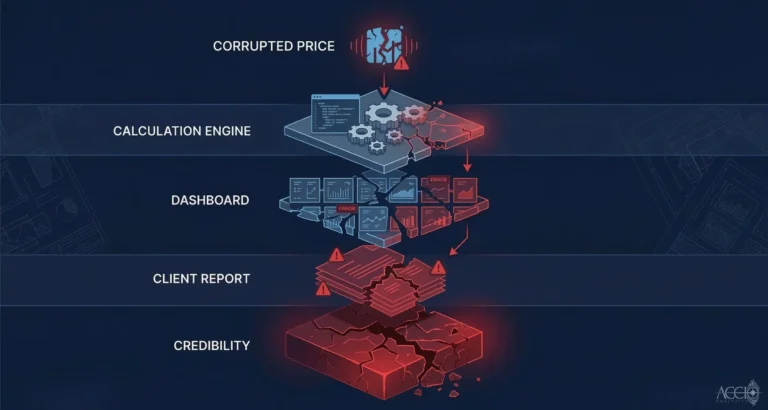
When something is wrong in a financial data system, the first question is: where did it start?
Answering that question is what data reconciliation is for. But reconciliation as most institutions practice it is reactive and manual. Something surfaces in a report. An analyst is assigned to find the source. They work backward through layers of calculation, processing, and ingestion until they identify where the value diverged from what it should have been. In a well-run operation with good tooling, this takes hours. Without it, it can take days.
The Glass Box principle exists to change this. Every calculation should be visible. Every data transformation should be logged. Every output should be traceable back to the raw input it came from. Reconciliation should not be a forensic exercise. It should be a lookup.
Accio Analytics built the Trace feature to do exactly this. Trace gives you complete lineage on any output in your system. You can identify, in seconds, which vendor feed introduced an anomaly, what value it carried, and when it entered the system. The six-day reconciliation exercise becomes a thirty-second search.
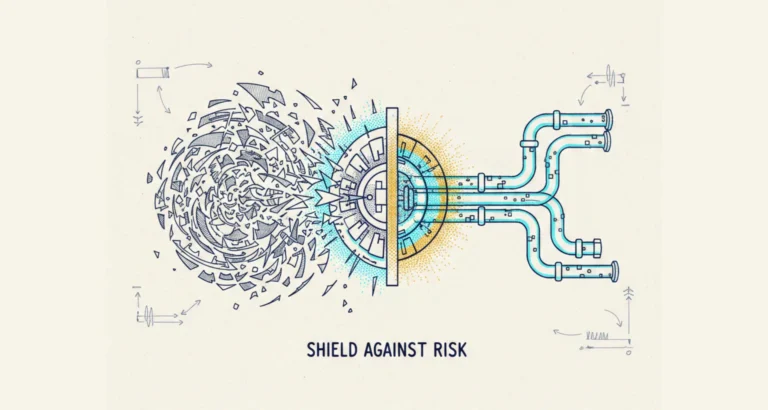
Trace is part of the Accio Ingestion Engine architecture. Because the Ingestion Engine logs every transformation from ingestion through normalization and validation, the full lineage is always available. You are not reconstructing history. You are reading a log.
By Sean Mentore, Co-Founder & Chief Architect, Accio Analytics
Technical Whiteboard Session
Sean is offering to sit down with your lead architect and head of operations for a 30-minute technical whiteboard session where we will:
- Map your current ETL flow for data ingestion
- Identify the specific points where your system leaks capital
- Identify where your data lineage fails the Proof of Origin test